
Teach kids how the water cycle works with a model that can be set up in your kitchen. Kids get to observe and understand more concretely how the water cycle works and what is actually happening during each stage. This model for kids learning the water cycle helps them see it.
Model of the Water Cycle
This model is not just a poster with each stage listed. It is a working model. To start, you will need a few supplies and electricity to get this going. Be safe with this and always keep kids a safe distance so they do not get burned by the skillet. Let’s dive in to what you need to set up this water cycle model.
Supplies:
Electric skillet
Cookie sheet
Ice (about 4 cups)
Water (about 4 cups)
Water glasses (8)
How to Make It Rain Inside: Exploring the Water Cycle with a Model
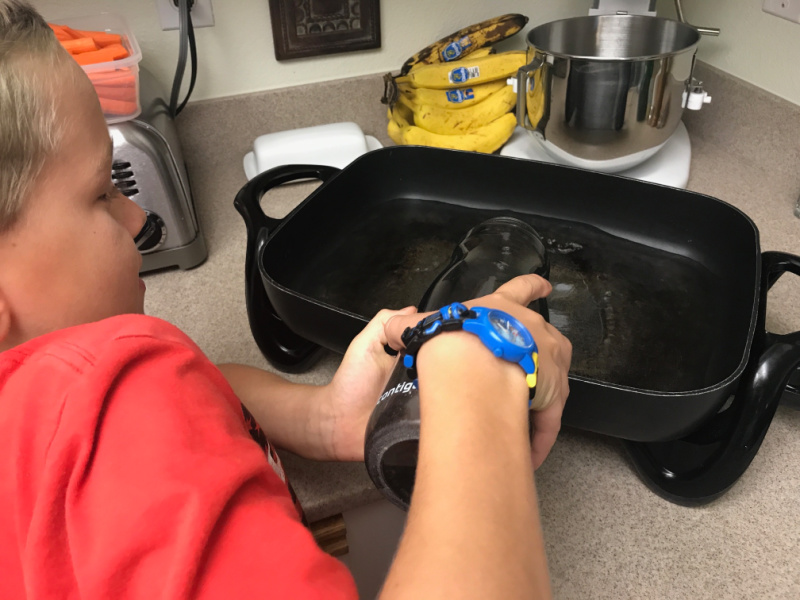
First step is to set the skillet on a stable surface. Pour the water into the skillet.
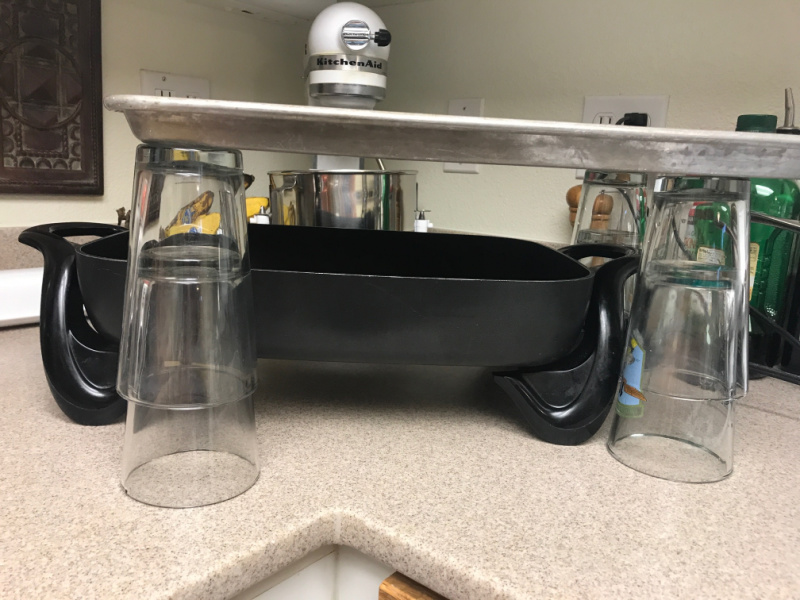
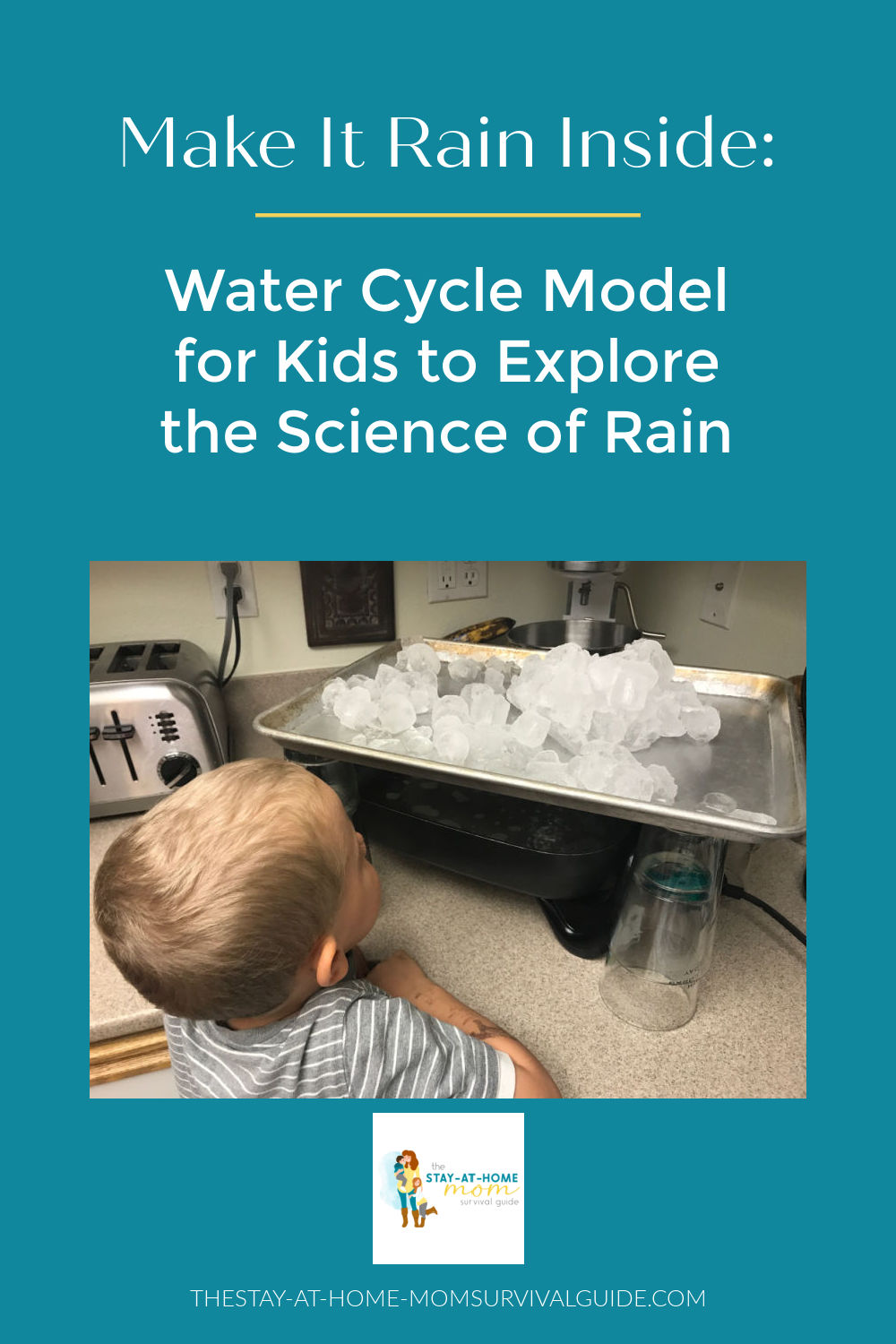
Then, place the glasses upside down with two stacked together, outside each corner of the skillet. Carefully set the cookie sheet on top of the glasses. Make sure it is stable.
While holding onto the cookie sheet, gently pour the ice onto the cookie sheet.
Make sure the cookie sheet is still stable once the ice is on it.
At this point you can turn the skillet on high.
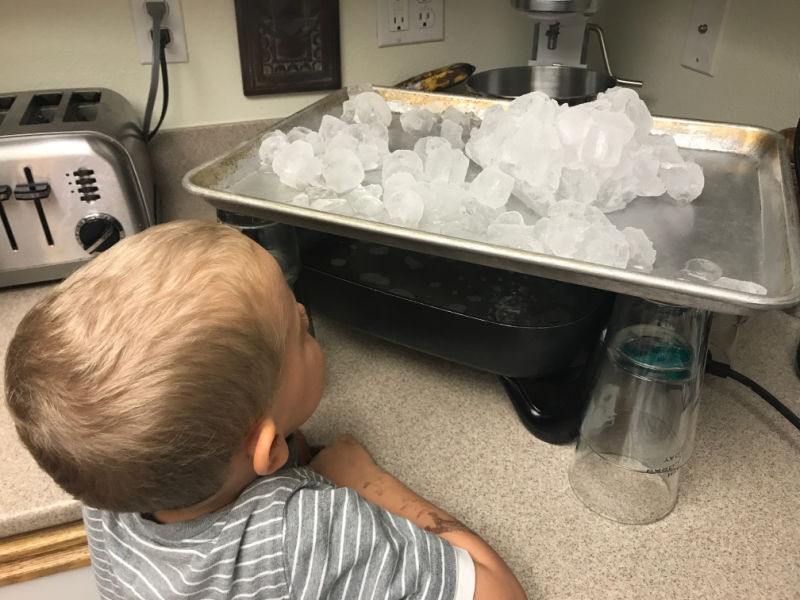
The kids can observe the set up. It’s important to remind them to keep their hands away from the skillet as it will get hot.
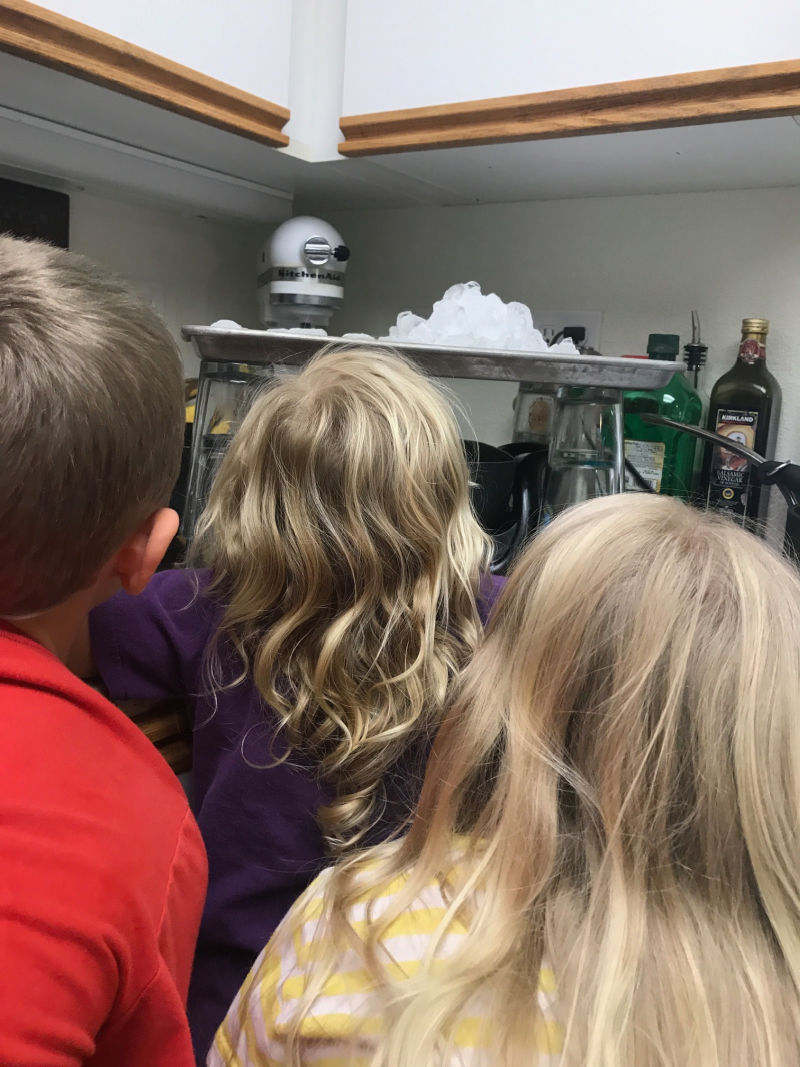
As they observe the process of the water heating, teach that the heating skillet is like the sun heating water in streams and lakes. The water in the skillet is like water in a stream or lake. The cookie sheet represents the atmosphere where the temperature starts to cool as you rise in elevation.
The ice is representative of the cooling that happens with this rise in height as water evaporates into the sky.
Steps of the Water Cycle:
Evaporation-Water is heated by the sun and rises into the air and atmosphere.
Accumulation-As water vapor rises, the water collects into clouds.
Condensation-As clouds rise the air cools, and the water vapor condenses forming droplets.
Precipitation-As the cloud gets heavy and sinks, water vapor forms into droplets that fall back to the earth as rain.
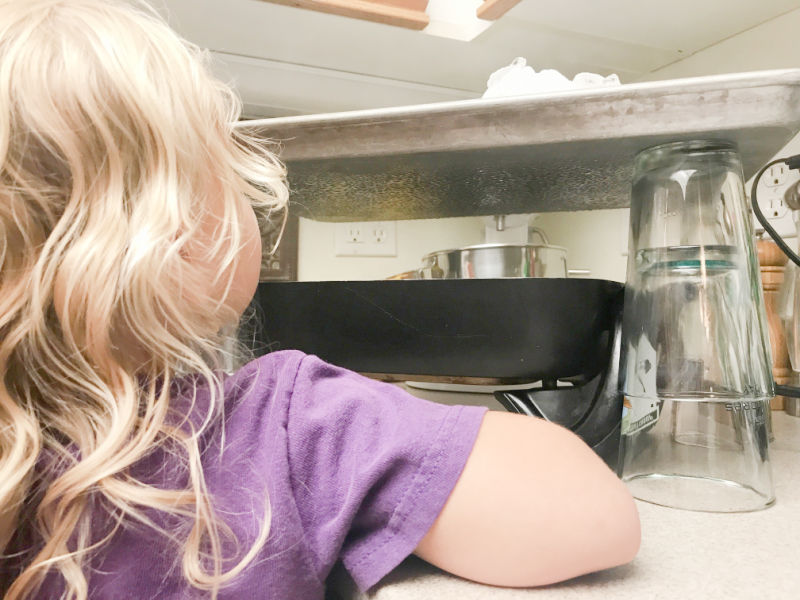
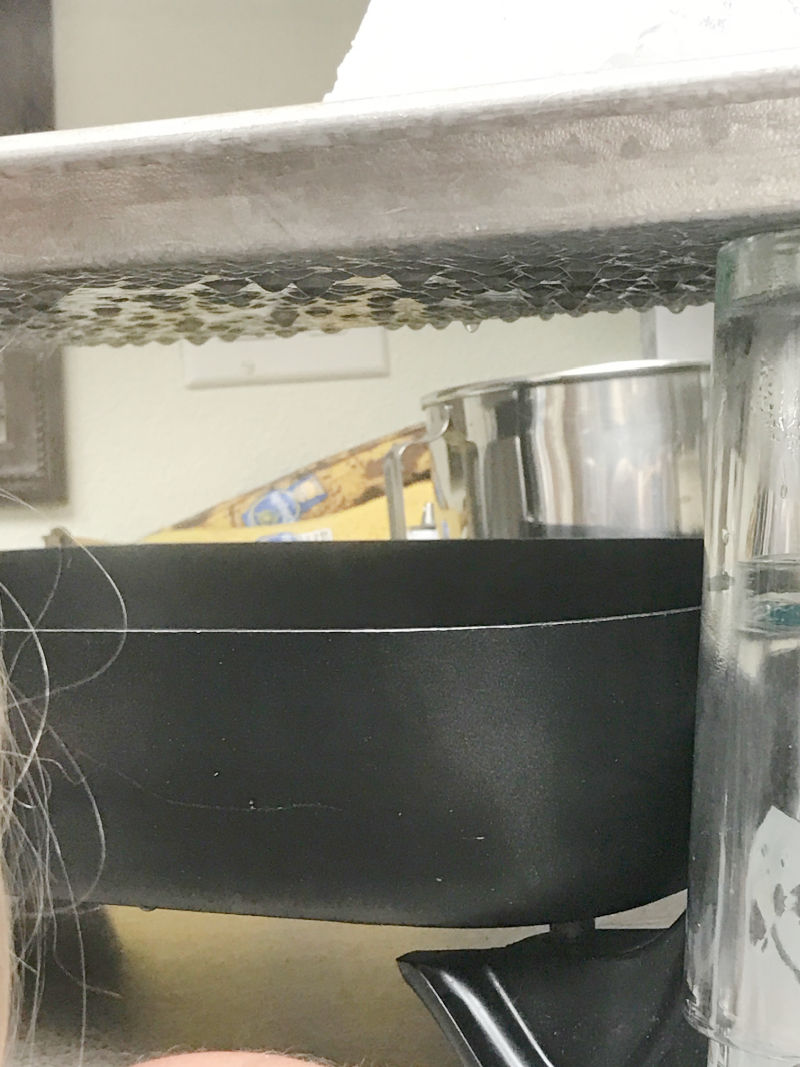
As the skillet heats, the water will start to evaporate up to the cookie sheet. The ice has cooled the cookie sheet, so the water vapor condenses on the underside of the sheet.
When the droplets get large enough, they fall back to the skillet like rain.
I used this model while teaching preschoolers and have used it with my own children while homeschooling. This printable pack of water cycle worksheets would be a great follow on activity for deeper learning.
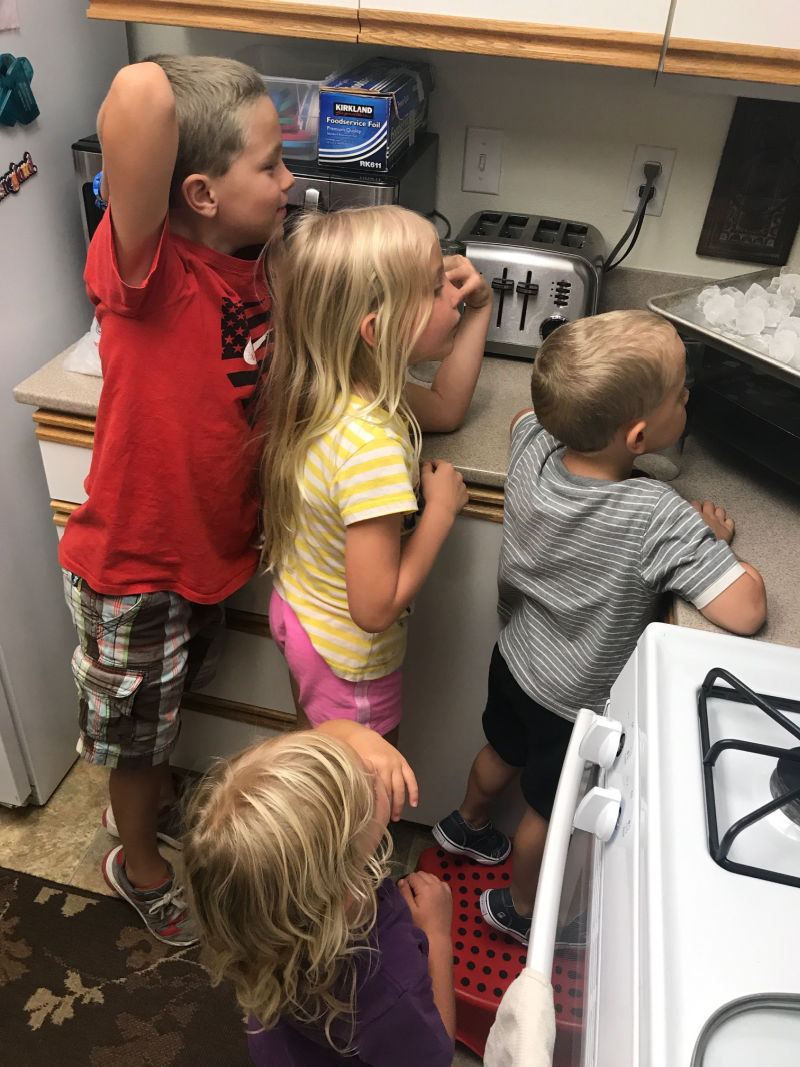
Kids love watching concrete displays of how science works. Although this is not a hands-on experiment for the kids, they can move from observing what is happening to journaling about it.
We use journals starting in preschool. Drawing what they see is an excellent way for young children of all ages to develop the learning process and show what they learned.
We love using this water cycle song to go along with our water cycle activity. There are also great printables out there to use as learning resources for learning about the water cycle..


I really appreciate how the Make It Rain model allows kids to observe each stage of the water cycle right in their kitchen! This hands-on experience must be so enriching, as it helps them understand how processes like evaporation and condensation work in real time. I can already imagine the excitement on their faces as they watch the water cycle unfold!
I’m really intrigued by the Make It Rain model and how it visually represents the water cycle! Setting it up in the kitchen sounds perfect for keeping kids engaged. The idea of watching the different stages as they happen will surely enhance their understanding of evaporation and condensation. This is definitely going to be a highlight during our next science exploration!
I love the idea of kids setting up the Make It Rain model in the kitchen to learn about the water cycle! It’s such a fantastic way for them to engage with science in a hands-on way. Watching the model and observing each stage must really help them connect the dots about how water moves in nature. Can’t wait to give this a try! REPLY
I’m thrilled about the idea of using the Make It Rain model to help kids grasp the water cycle! It’s so empowering for them to see the process unfold right in their own home. I think the hands-on approach will really spark their curiosity about nature. Looking forward to setting this up!
I love how the Make It Rain model lets kids actually see the water cycle in action! It’s such a creative way to make science hands-on and relatable for them. I can’t wait to incorporate this into our next science activity!
I’m excited to try the Make It Rain model in my kitchen! It sounds like a fun way to help kids visualize the stages of the water cycle. worth a look