

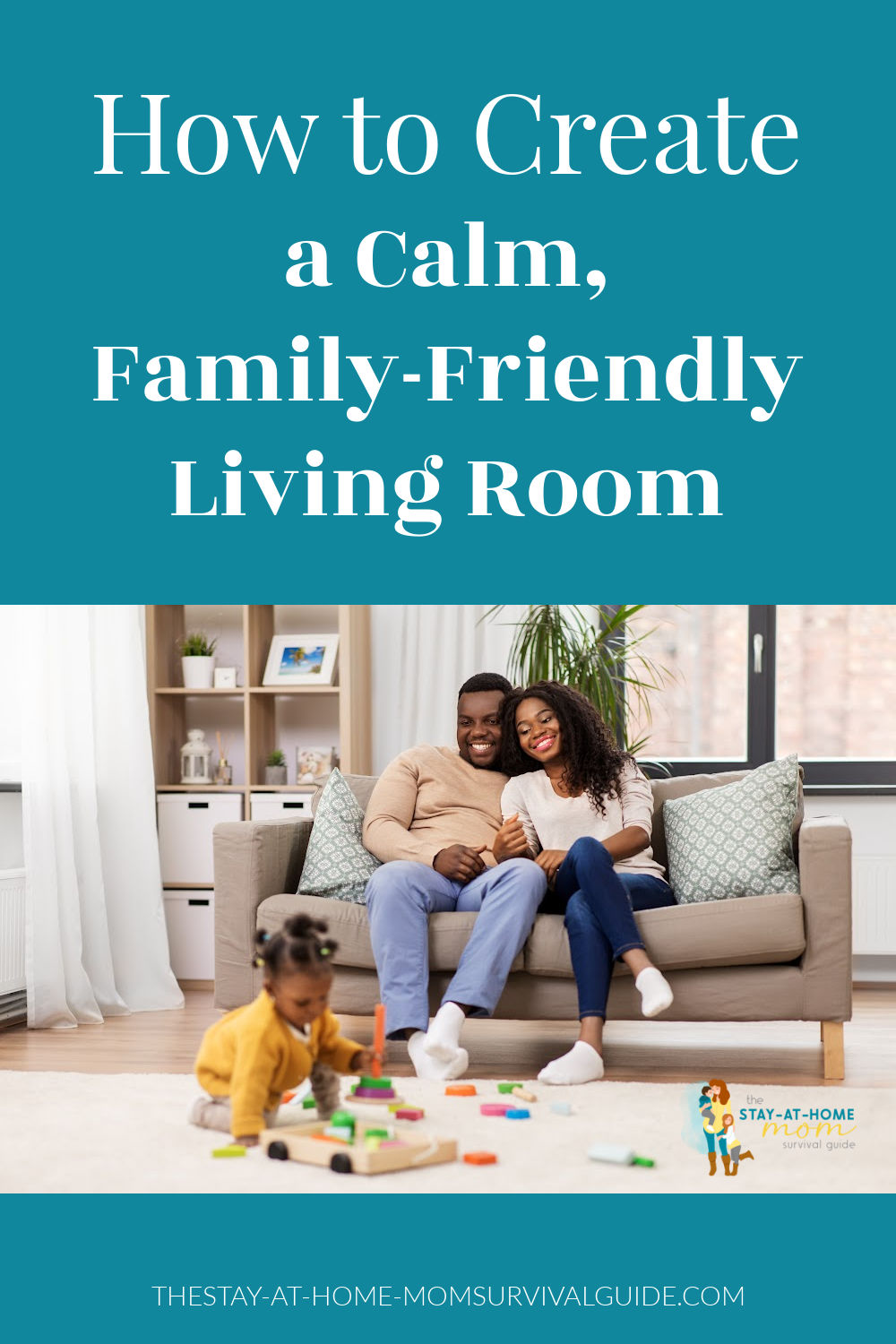
There is a particular kind of chaos that a family living room develops over the course of a normal day. By early evening it might have cushions distributed across the floor, a blanket that started on the sofa and migrated somewhere else, a toy or several in the vicinity of the coffee table, and a general sense that the room is working hard.
Most of this is not a problem. The problem is when the room reaches a state of disorder that requires a significant effort to restore, or when the furniture and layout make that worse rather than better. Some rooms recover in five minutes. Others seem to resist tidying no matter how much effort goes in.
The difference is usually in the decisions made before the room was furnished.
What This Room Actually Needs to Do
It is worth thinking through this before looking at furniture, because the answers are genuinely different for different families.
In some households the living room is the main play space for young children — hours of floor time, toys spread across most of the available surface. In others, children play elsewhere and the living room is primarily where the adults decompress after the kids are in bed. Some families eat snacks there; some have a strict no-food rule. Someone might be nursing a baby in that room eight or ten times a day. Homework might happen on the coffee table.
Write it down if that helps. What happens in there on an ordinary Tuesday?
When you go to choose furniture for a room with these specific requirements, one photo in a catalogue is almost never enough to judge whether a piece will actually work. Clear room scenes, multiple angles, and visuals created through furniture 3d rendering services can make it easier to compare options before bringing a new piece into the home — seeing something styled in a real room, at actual scale, alongside other furniture, tells you things that a product shot against a white background cannot.
The Sofa
Most families use the sofa more than any other piece of furniture in the house. It is where children read, where someone folds laundry, where the toddler bounces, where everyone piles on for movie nights, where the parent finally sits down at nine in the evening.
Given how much use it gets, seat depth is worth checking carefully. Very deep seats feel wonderful for tall adults who want to sink in. Children, shorter adults, and anyone who sits upright rather than lounging often find them uncomfortable enough to use the floor instead — which defeats the purpose.
On fabric: it helps to be honest about what your family is actually like rather than the most optimistic version. A very pale, loosely woven fabric might photograph beautifully and require a level of daily vigilance that adds stress to your life. Tightly woven fabrics in mid-tones and patterns tend to hide the evidence of daily life better than the alternatives.
And one thing that sounds obvious but gets ignored regularly: too many seats make a room feel cramped and harder to keep tidy. Extra chairs that nobody uses are just things to walk around.
Storage
Here is the practical test for any storage piece: could a tired adult returning home on a busy evening actually use this to put things away in thirty seconds?
If the answer requires finding a specific bin, removing a lid, locating a category, or being in any way deliberate — it probably will not happen consistently. The things that need to go away quickly are the things that accumulate during the day. A basket beside the sofa that things can just be dropped into is more effective than a beautifully organised shelving system that requires thought.
An ottoman near the coffee table catches blankets and soft toys. Low shelves within a child’s reach mean a child can sometimes manage their own things without help. A media unit with doors that close is worth prioritising over open shelving, because open shelving in a family room tends to display a mixture of objects that gradually stops resembling a design choice.
A Bit of Structure Without Making It Official
The rooms that feel calmest are often the ones where different activities happen in roughly the same places rather than everywhere all at once.
A rug under the seating area does this automatically — it gives the sofa and chairs a defined territory on the floor. A corner with a small basket and a low surface suggests a place for children’s things without requiring enforcement. A reading lamp beside an armchair creates a different kind of spot than the main sofa. None of this needs to be formalised.
What it does, practically, is give things approximate homes. A room where activities have no particular location is genuinely harder to restore to order than one where things drift slightly from their homes and can be returned to them quickly.
The Visual Part
Rooms that feel calm to look at tend to have a relatively simple backdrop. This is not about minimalism — families have belongings, children have many things, life adds objects — but about whether the walls and large furniture are adding their own visual activity on top of everything else, or providing somewhere quiet for the eye to land.
Neutral walls and upholstery in quieter tones mean that the bright toys, the patterned blankets, and the children’s artwork become the colour and interest in the room, rather than competing with it.
Coffee tables are worth mentioning specifically. The number of small objects on a flat surface has an outsized effect on how the room reads. One or two things plus some clear space looks fine. Twelve things, even twelve nice things, looks like a surface in need of attention.
Materials Worth Thinking About
Low-pile or flat-weave rugs in a room with young children are much easier to maintain than deep-pile ones. Crumbs and small debris sit on the surface rather than disappearing into it.
Rounded edges on coffee tables sound like a small detail until you are living with a child who has recently learned to walk.
Wood tones in the middle range — not very pale, not very dark — tend to be more forgiving of daily marks than either extreme.
Ending Each Day
A brief reset at the end of the evening makes a bigger difference to how the room feels than almost any furniture or storage decision. Not a full clean — just returning things to approximately where they belong.
This takes about five minutes when there are enough storage spots close to where things are actually used. It takes considerably longer when things have to travel across the room to get home, or when there is not quite enough space for everything the room generates.
The rooms that feel manageable are often just the ones where someone thought through where things would actually go before the room was set up.





Helpful article. shiboudouki
Informative post! I came across Flow Music recently and it works surprisingly well.
Thanks for this! I’ve been testing Flow Music and it’s been really impressive for music generation.