
Parents face one of the most challenging balancing acts in modern life: caring deeply for aging parents, chronically ill relatives, or family members with disabilities while simultaneously nurturing young children who may not fully understand why mom or dad seems stretched so thin.
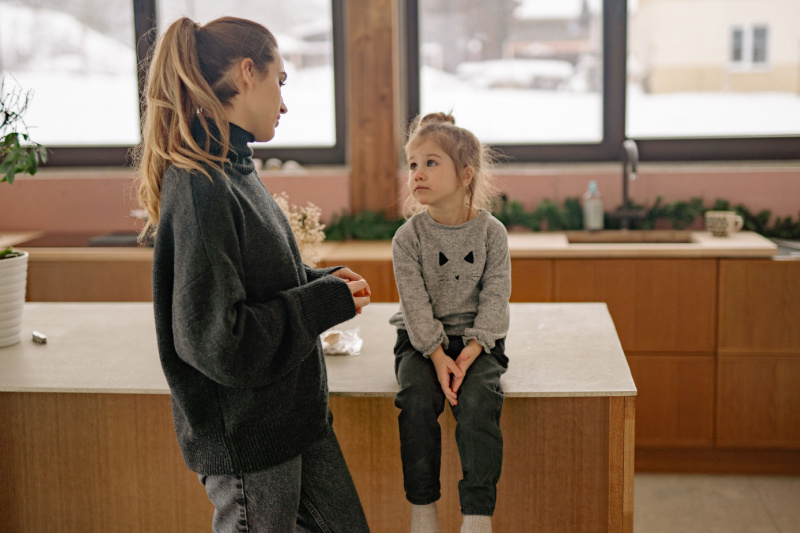
Photo by Yan Krukau: https://www.pexels.com/photo/girl-sitting-on-kitchen-table-while-listening-to-woman-6617507/
As a child development psychologist would advise, these conversations about the emotional weight of caregiving responsibilities need not be avoided or simplified to the point of meaninglessness. Children are far more perceptive than many adults realize, and transparent dialogue grounded in age-appropriate language builds trust while teaching them crucial emotional literacy skills.
More than half of caregivers reported burden related to caregiving, which creates ripple effects throughout the entire family system. When parents shoulder the complex responsibilities of coordinating medical appointments, managing medications, providing personal care, and offering constant emotional support to an ill or aging relative, young children observe these stressors even when adults attempt to shield them. The question becomes not whether to discuss these realities, but how to frame them in ways that validate children’s observations while protecting their sense of security.
Explaining the heavy emotional load of family caretaking to your young kids
This conversation requires vulnerability paired with structure. Begin by acknowledging what your child has likely already noticed. Simple observations like “I’ve been spending a lot of time helping Grandma lately” or “You’ve probably noticed I seem tired after visiting Uncle Mike” create openings without overwhelming young minds. Mental health should not be a taboo topic in family discussions, and addressing caregiving stress openly models emotional honesty.
Children between ages four and eight benefit from concrete explanations tied to experiences they understand. You might explain that just as they sometimes feel tired after a long day at school, you feel tired after helping family members who need extra support.
Hearing about the emotional experiences of others helps children understand helpful ways to express and regulate emotions. Frame your caregiving role as an expression of love and responsibility rather than burden, while still being honest about the emotional complexity involved.
Preschool-aged children process information through what they can observe directly.
Preschool children are more likely to focus on what they can see, and showing an emoji or drawing may give them a way to share with you how they are feeling. Use these same visual tools to explain your own emotional state. A feelings chart displayed in a common area allows you to point to “overwhelmed” or “worried” when appropriate, giving your child language for states they might otherwise find confusing.
Why naming caregiver emotions strengthens family bonds
On average, caregivers reported moderate to high levels of perceived burden, particularly in emotional, physical, and social domains. When parents name these dimensions honestly, children learn that complex emotional states are normal rather than frightening. The goal is not to burden children with adult worries but to normalize the full spectrum of human emotion within safe boundaries.
Explain that sometimes adults feel many emotions at once. You might love Grandpa very much and also feel sad that he is sick, worried about his health, and frustrated when plans change suddenly. This multiplicity mirrors experiences children have themselves when they want to play with a friend but also feel upset that the friend took their toy. building emotional intelligence starts with validation of these layered emotional realities.
Age-appropriate strategies for different developmental stages
To make communication effective, participants emphasised the importance of age-appropriate dialogue, addressing children’s concerns, providing reassurance, and preparing them for future episodes. For toddlers and preschoolers, keep explanations brief and centered on immediate observable changes. Elementary-aged children can handle more nuanced discussions about illness progression, behavioral changes in the care recipient, and the time commitments caregiving requires.
Tweens approaching adolescence often benefit from being included in age-appropriate ways. They can understand that family caregivers face substantial stress, and that sharing household responsibilities helps the entire family system function more smoothly. This inclusion fosters empathy while teaching practical life skills.
Research demonstrates that conversational turn-taking supports brain development in children, making these dialogues about family caregiving doubly valuable. Ask open-ended questions like “What have you noticed about our schedule lately?” or “How do you feel when I need to leave to help Aunt Sarah?” Listen carefully to responses without rushing to correct misconceptions. Children’s interpretations often reveal worries adults never considered.
Maintaining stability while acknowledging change
Shielding children from serious causes of stress can worsen a child’s anxiety because children commonly assume a worst-case scenario, and providing age-appropriate information helps. When a parent takes on intensive caregiving duties, family routines inevitably shift. Rather than pretending everything remains unchanged, acknowledge the adjustments while emphasizing continuity in parent-child connection.
Reassure children that while schedules might look different, your love and commitment to them remains constant. Create predictable one-on-one time, even if shorter than before. Quality matters more than quantity, and these dedicated moments become anchors of security. Children can tolerate significant external change when their core attachment relationships remain stable and responsive.
Frame caregiving responsibilities as part of a larger family value system. Explain that families take care of each other across generations, and someday when you need help, others will be there for you. This generational perspective helps children understand caregiving as an expression of family values and connection rather than as an isolating burden that diminishes their importance.
Building resilience through honest dialogue
Children gain resilience not through being protected from all knowledge of difficulty, but through learning they can navigate challenges with support. When parents model healthy coping strategies, name their emotions accurately, seek help when needed, and maintain open communication, children absorb these patterns as templates for their own future stress management.
The conversations about family caregiving become opportunities to teach that love sometimes requires sacrifice, that asking for help demonstrates strength rather than weakness, and that families function best when everyone contributes according to their abilities. These lessons extend far beyond the immediate caregiving situation, shaping how children will approach their own relationships and responsibilities throughout life.