
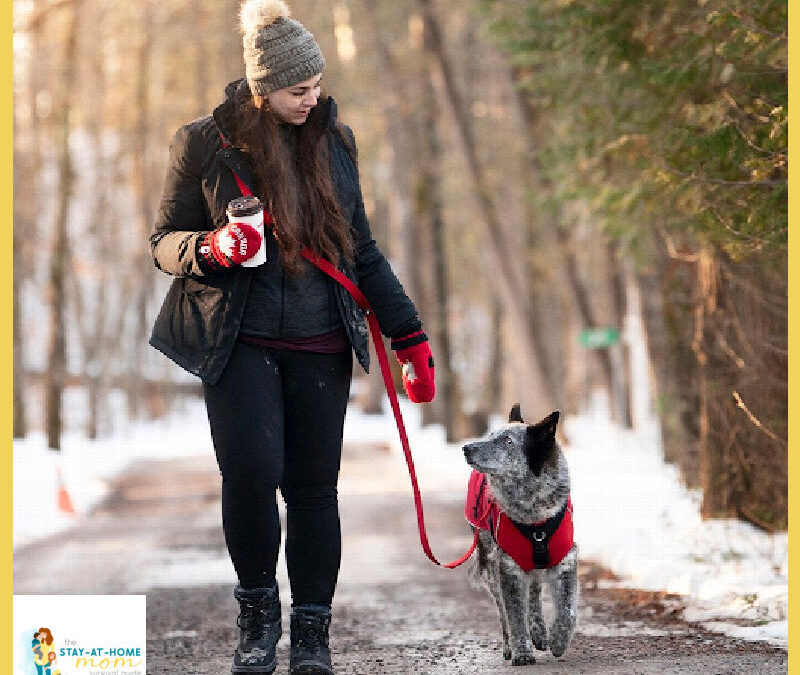
Winter can already make a simple dog walk difficult enough without adding school runs and trying to keep up with a busy schedule. The fix isn’t complicated, though. You just need a plan to be adequately prepared. A few small habits can make the walk quicker to start, easier to manage, and more comfortable for your dog, without sacrificing too much of your time. Here’s where to start.
1. Keep a ready-to-go dog-walking station by the door
Pick a spot near the door. Place a basket, a hook, or a shelf. Put the leash there, the waste bags, a towel, treats, and clip-on lights, all together, so you’re not hunting room to room while you’re still wrestling kids into their coats for school. This is a great responsibility to give to kids too. Kids learn a lot from chores. This dog care chore chart is a helpful guide.
Throw a spare roll of waste bags in there too. Feels like overkill until the one you have runs out mid-walk and you’re standing there with nothing, already ten minutes behind schedule.
2. Add a warm outer layer on cold, windy days
Not every dog needs a jacket. Some do, though, and it’s usually the small breeds, the puppies, the older dogs, or those with fur coats too thin to do much good on their own.
Fit is what actually matters. When you’re picking out dog jackets for winter weather, check that your dog can still walk, still move naturally, still squat for a bathroom break without the thing riding up or pinching somewhere.
3. Protect paws from icy, salted, rough paths
Winter pavement can be brutal on paws, honestly. Ice alone can be enough to make a dog uncomfortable, and then there’s rock salt and other de-icing products irritating the pads. Ground that’s frozen or rough can also make a dry or cracked paw worse.
So take a beat before you head out and think about where you’re actually walking. Any way to skip the worst of the salt or ice? Go that route instead. Dog boots for icy walks are another option, giving the paw a barrier against the ground, but introduce them at home first. Just don’t spring them on your dog for the first time on a walk.
Back inside, wipe or rinse the paws and check between the toes. Costs two minutes, saves you a limping dog later.
4. Have a plan for rainy school-run walks
Winter weather can change quickly. Rain may turn into sleet, and paths can become muddy. So, keep a towel and suitable outer gear ready for walks you can’t postpone.
On wet days, a dog rain jacket can help keep your dog’s coat from becoming soaked and muddy, making cleanup easier. And really, your dog staying dry during sudden downpours comes down to one thing: knowing where the essentials are before you need them.
And if it gets genuinely bad out there? Shorten the walk. Take the safer route even if it’s not the usual one. A quick lap home in one piece beats muscling through for the sake of sticking to the routine.
5. Make darker walks safer
A lot of families end up walking the dog at the edges of the day. Early morning before the school run, or late evening once everything else is finally done. Which means low light. Which means your dog needs to actually be seen. Reflective gear helps with that, and a clip-on or LED light adds one more layer of visibility so drivers and other walkers aren’t caught off guard.
Stick with routes you know, well-lit ones when you can choose, particularly near roads and crossings. And carry a small flashlight to help you spot puddles, uneven pavement and other hazards.
6. Bring towels and paw-cleaning supplies
Walking through the front door is only half the battle. Muddy paws and a clean floor don’t mix, so keep an old towel and a washable mat parked by the entrance, somewhere your dog can stand for thirty seconds while you clean their feet.
A towel and a damp cloth or some pet-safe wipes cover most routine cleanups. But walked through salt or grit? Rinse the paws properly with clean water and dry them, toes included.
7. Keep winter walks short but engaging
A shorter walk during winter does not have to be boring. Give your dog more to investigate within the time available.
Let them sniff, instead of tugging them past every patch of grass because the clock’s running. Switch the route once in a while, fit in a quick cue-and-treat moment, leave room for a short play break if the weather allows it.
The distance doesn’t have to match yesterday’s. A short, focused walk with some indoor enrichment afterward is a perfectly reasonable version of “walked the dog” on the harder days.
8. Pack a small winter dog-walk emergency kit
Keep it simple. Water, a few treats, a spare roll of waste bags, basic first-aid supplies, a backup leash, all in one small pouch. That covers most of what tends to go wrong.
Check it every few weeks. Restock what’s gone. It pays off most on the days that slide straight from dog walk into errands or the school pickup line, since a forgotten leash matters a lot less when a spare’s already sitting there waiting.
9. Watch for signs your dog has had enough
Pay attention to what your dog’s telling you out there. Shivering, repeatedly lifting a paw off the ground, slowing down, stopping altogether, or just seeming reluctant to keep moving. All of that is worth noticing, not brushing off.
The usual walk length was never a promise you have to keep. Ice underfoot, weather turning nasty, a dog that’s clearly had it? Head home. Anything more serious, like real weakness, confusion, trouble with coordination, or a collapse, means getting to a vet immediately, not waiting it out.
Cold hits every dog differently, and size, coat, age, and general health all factor into how much any dog can handle. And if your dog already deals with a health condition, or seems oddly sensitive to cold, ask your vet about another way to keep them moving through winter.
Most of the stress in winter dog walks comes from leaving the small stuff until the last second. Handle it ahead of time and the whole routine gets lighter. Some days will look like any other walk. Some won’t, and a shorter version with a bit of indoor enrichment does the job just fine on those. Either way, a little planning up front means winter walks stay a normal part of the day instead of becoming one more thing piled onto an already full schedule.



These suggestions are so practical! I especially love the idea of prepping the night before to make those chilly morning walks easier. As a busy parent, finding little ways to streamline tasks really helps. I’m excited to implement these tips and hopefully enjoy winter walks with my dog more!
I love these tips! Winter dog walks can feel daunting, but your suggestions make it so much easier for busy parents like me. Thanks for the helpful ideas run 3 – I can’t wait to try them out!